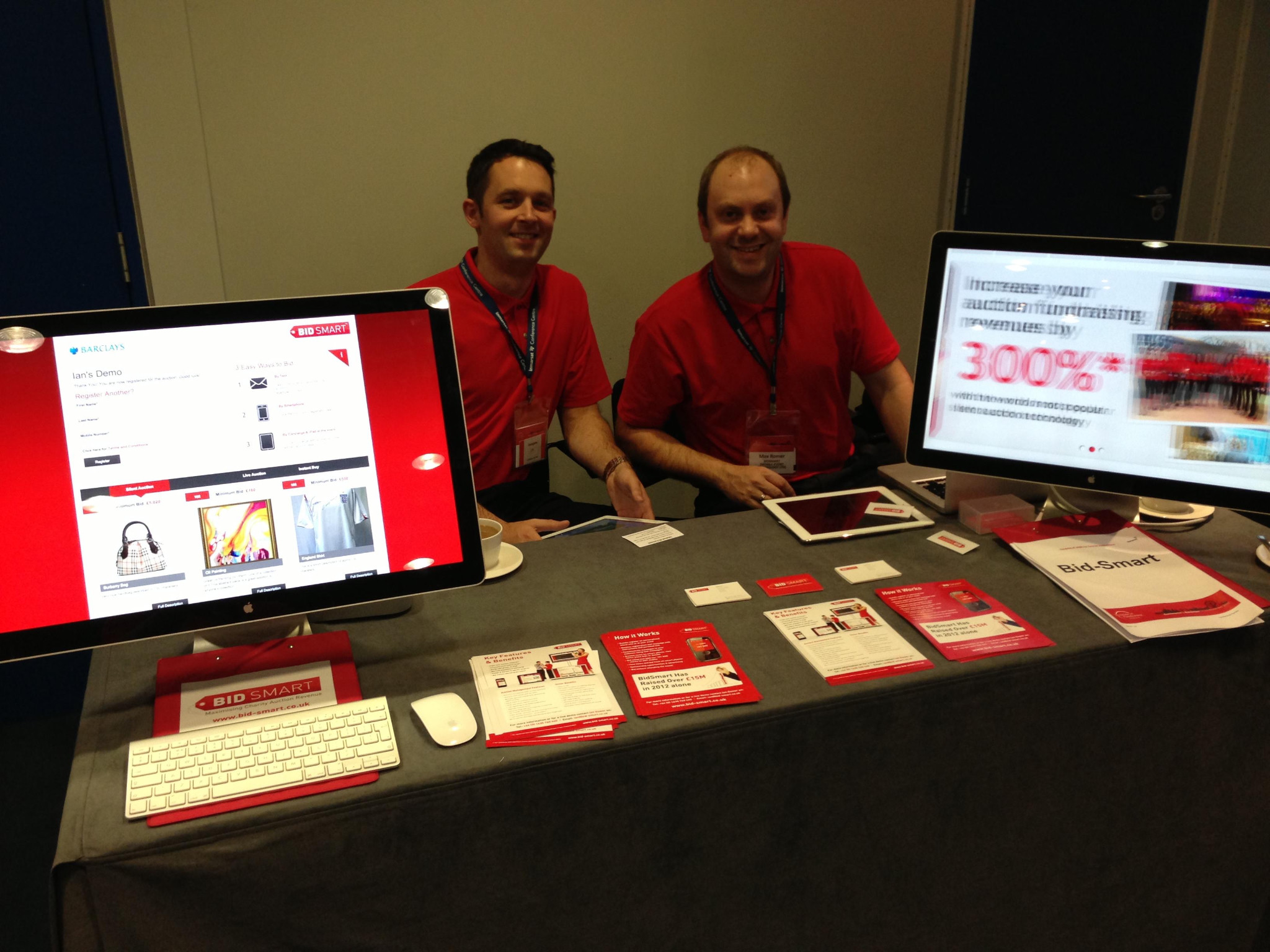
Before GiveSmart, there was a small marketing agency, a charity gala and a question: could we make the silent auction work better?
We’re Tom, Max and Matt, the three friends who founded GiveSmart. Our story starts in Newbury, in the UK, where we were running an online marketing agency called Addbox in 2010. We built websites and helped businesses find customers. Then a charity client arrived with a different challenge.
They wanted their upcoming gala dinner to be a success, with the silent auction playing a big part. That brief sent us down a path none of us had planned. It eventually took us to Atlanta, to fundraising events across the United States and beyond, and now to Mobli.
A charity auction, powered by text messages
Matt had previously been a senior technologist at Ringtones.com and knew a great deal about SMS and shortcodes. Between the three of us, we came up with an idea: let guests bid by text message.
When someone outbid them, they would receive a notification. They could then send another text to increase their bid. We added a web service that displayed the latest bids on a plasma television, bringing the auction into the room as it happened.
The client loved the idea. We called the product BidSmart.
That first event is still one of our favorite memories. As we remember it, the event raised three times as much as the previous one, with a level of activity and engagement that made us think we might have stumbled onto something worth pursuing.
Then, within a few weeks, five unsolicited inquiries arrived at Addbox asking about the mobile bidding system. We had built something for one client. Other fundraisers wanted it too.
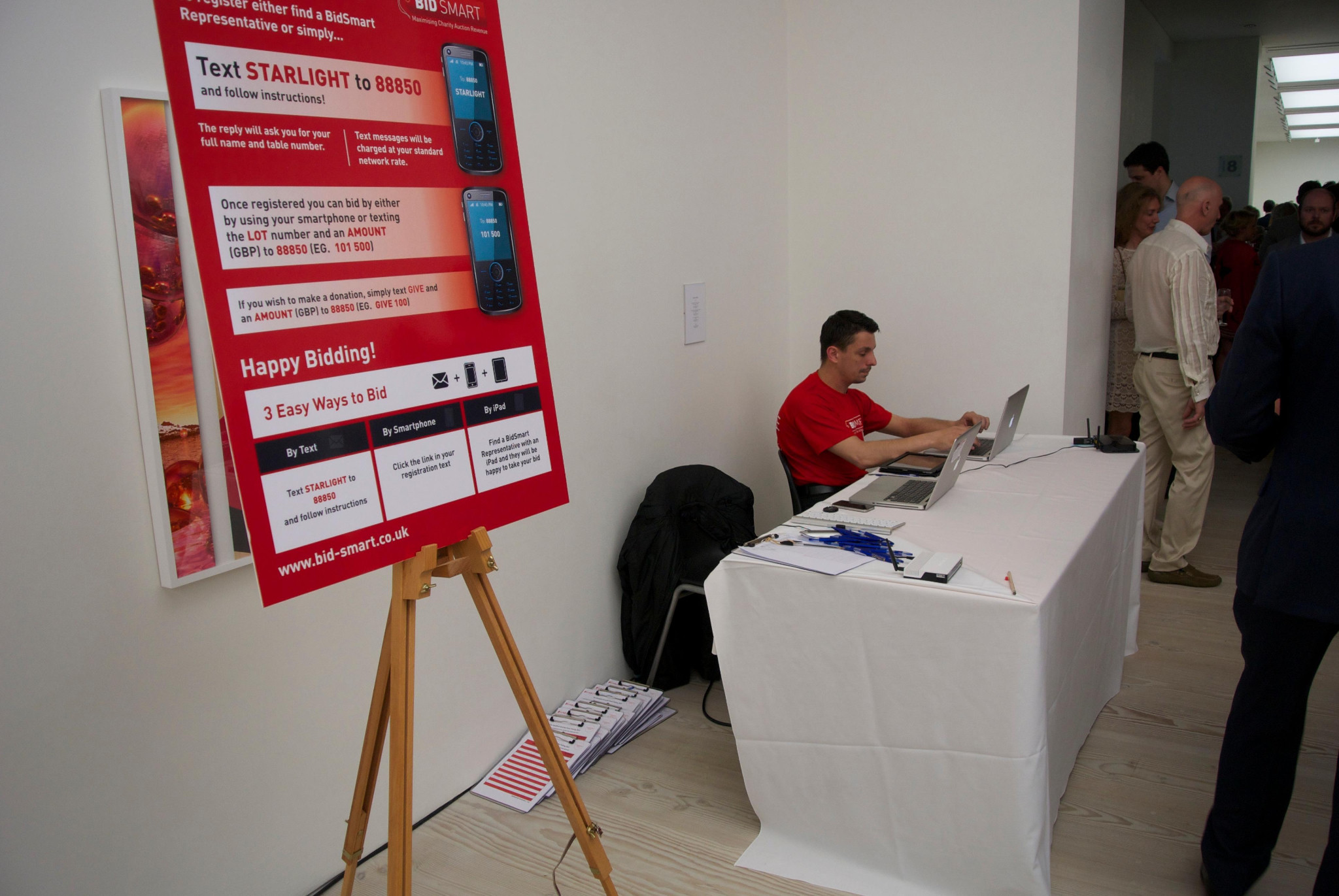
Text-bidding instructions beside a BidSmart registration table.
The link that changed the experience
At the time, we were also building mobile websites. Max made the connection: why keep the whole auction inside a text message?
A text could contain a link. That link could take a guest to a mobile website where they could see photographs, read item descriptions and place their bids. We could still use texts to bring people back when they were outbid, without trying to squeeze everything into a short message.
We put together a prototype. It was clunky, occasionally unreliable and a long way from the polished product we wanted it to become. But it worked, and people liked using it.
The possibilities quickly widened. An auction item could have a proper story behind it. Guests could browse what interested them, rather than rely on a brief description. The phone they already carried could become their way into the whole event.
A 2013 industry brochure captures that early approach: it describes BidSmart, by then renamed GiveSmart, with bidding on guests’ own phones and text notifications when they were outbid. Looking back, that small combination of a mobile website and a timely message was the foundation for much of what followed.
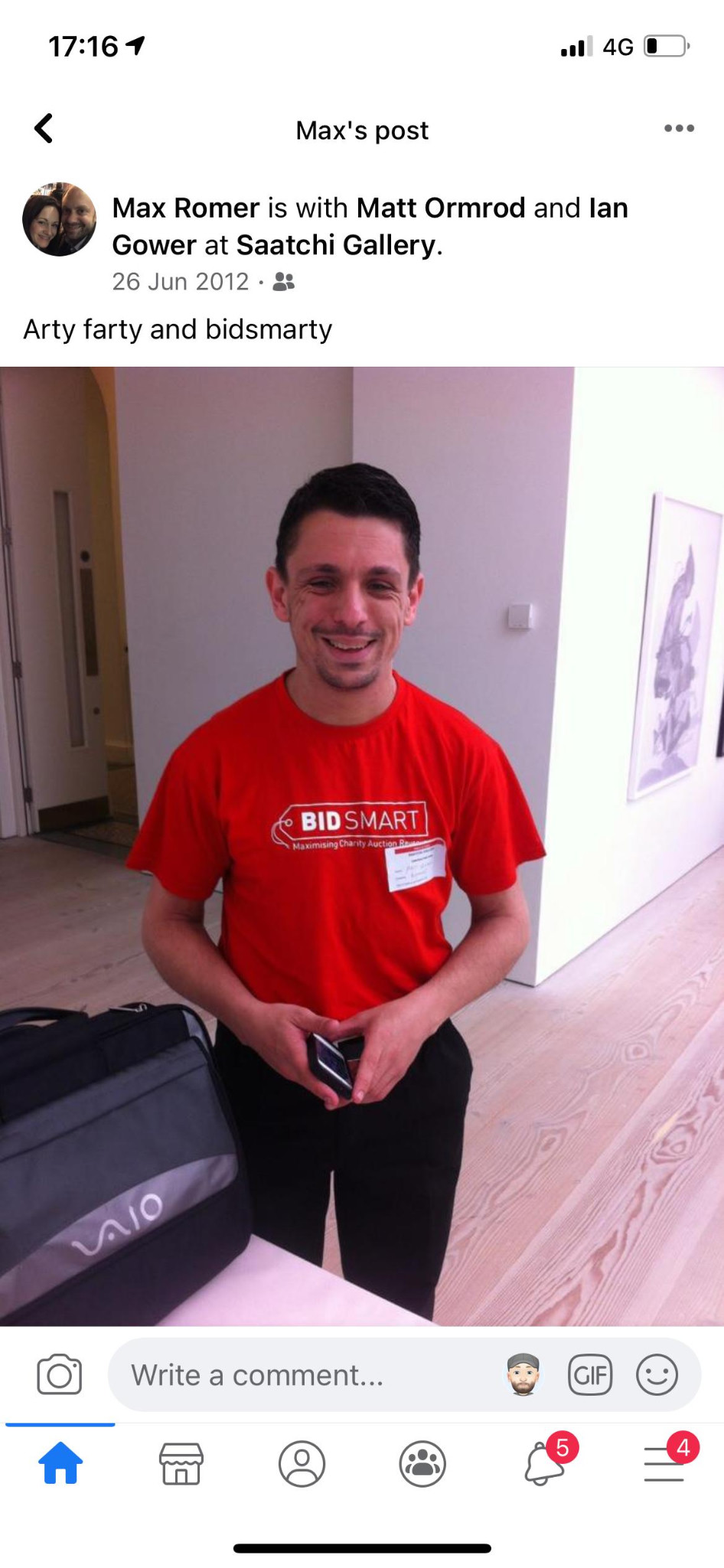
A social post naming Saatchi Gallery, dated June 26, 2012.
From Newbury to Atlanta
As the product grew, we became convinced that our biggest opportunity was in the United States.
Our experience in the UK was that many events still expected dedicated bidding devices on tables, often alongside consignment auction items. Our approach asked organizers to do things differently: let guests use their own phones. There were people who embraced it, but we could see a larger opportunity to build the business across the Atlantic.
We secured investment and opened an office in Atlanta. BidSmart became GiveSmart, partly because the earlier name presented potential trademark complications, but also because the product had already grown beyond bidding.
People were using it for text-to-give and buy-it-now items as well as silent auctions. GiveSmart gave us room to grow with them.
The team expanded quickly. We remember reaching the point where we had supported events in all 50 states, with licensees taking the platform into Australia, Hong Kong and Canada.
Those experiences taught us how much happens behind a successful fundraiser: the auction catalog, guest details, payments, questions, last-minute changes and the reporting afterwards. Good software had to help the people running the event as much as the people attending it.
Recognition, growth and a changing industry
In 2016, GiveSmart UK won the Event Technology Award for Best Technology for Event Monetisation or Fundraising, for its work on the Waitrose Supplier Gala Dinner.
It was a lovely milestone for an idea that had started with one charity’s brief. More importantly, the work kept bringing us into contact with fundraisers who showed us what they needed next.
The industry was changing too. In March 2017, GiveSmart’s UK and European event delivery business merged with Givergy. Later that year, Community Brands announced its acquisitions of 501 Auctions and Gesture, alongside an agreement in principle to acquire GiveSmart. GiveSmart’s own company history places the three businesses coming together in 2018.
These were distinct developments, but part of a wider period of consolidation in fundraising technology. For us, they marked the next stage of a business that had grown a long way from that first text-message auction.
An idea that stayed with us
We stayed friends. Our work took us into adjacent industries, including faith-based giving and other payment businesses. Addbox is still going too, although these days it operates without the old office and with much more AI assistance.
One thought kept coming back.
In 2018, Tom was already asking whether fundraising software could become easier for organizations to run themselves. We had built a business with a substantial service component. Fundraisers valued support, but they also wanted to get things done without waiting for someone else to do every step.
The question was how to give them that independence without simply handing them more software to learn.
Advances in AI have given us a new way to approach it. That is what has brought the three of us back together.
Meet Mobli, your fundraising buddy
We’re building Mobli around a straightforward idea: when you need a hand, you should be able to ask.
You might need a report for the board after your autumn gala. You might want to find supporters who attended last year but have not booked this time. Or you might need help organizing auction items into appealing packages and drafting a message to your volunteers.
Our ambition is to bring those jobs together with the tools fundraisers use every day: donor records, auctions, donations, events and communication. Mobli is being designed to help you work through the details and get things ready, while you keep the final say.
We want the experience to feel approachable, whether you are running your first community fundraiser or coordinating a much larger program. The point of all this technology is to give you more time and confidence to do the work you care about.
The first chapter started with one charity asking for a better auction. This next one starts with everything we have learned since, and the same curiosity about making fundraising easier.
The band is back together. We’d love you to be part of what comes next.